
It is 10:17 a.m. on a Tuesday. Receiving is backed up. Two trailers are at the dock. Maintenance has a conveyor partially locked out. A contractor is working above the production floor. Forklifts are moving product. Batteries are charging. Then the fire alarm activates.
The emergency plan says to evacuate. But what happens to the operation that was running five seconds earlier?
A floor plan represents the building. An evacuation drill tests the human system operating inside it. But neither proves that the emergency plan has been tested against the operation.
The Plan May Be Right – and Still Miss the Operation
Most emergency plans answer necessary questions: Where are the exits? Who calls 911? Where do employees assemble? How is accountability completed?
But emergencies rarely begin in a clean, idle building. They begin in the middle of work.
OSHA’s Emergency Action Plan standard recognizes this reality. In addition to evacuation and accountability, 29 CFR 1910.38 requires procedures for employees who may need to remain temporarily to operate critical plant functions before evacuating. Some equipment, processes, or utilities cannot simply be abandoned without creating additional risk.
Warehouse fire data reinforces the point. NFPA’s 2026 warehouse fire report estimates an annual average of 1,544 warehouse structure fires from 2020 through 2024. Seventy-one percent occurred while facilities were occupied and operating, and operating equipment was the leading heat source, associated with 43 percent of fires.
The operation is not background noise during an emergency. It is part of the emergency.
What Happens to the Work Already in Motion?
When the alarm sounds, a machine may be under maintenance. A production line may be running. A forklift may be loading a trailer. A contractor may be somewhere employees rarely enter. A process may require a controlled shutdown.
Who owns those conditions? Is that person working that shift? Could shutting down one system create another hazard? Does accountability include the driver at the dock or the contractor working above the floor?
A drill can look successful without answering those questions. Everyone reaches the assembly area. The headcount matches. The drill is closed. But what did it actually prove?
Emergency readiness is more than getting people outside. It is moving from normal operations to a safe emergency condition without losing control of the hazards, people, and decisions that existed when the event began.
Test the Operation, Not Just the Evacuation
The next drill does not need to be a full-scale exercise. It should test the operation as it actually exists – not as the plan assumes it does.
Walk the facility during different shifts. Identify equipment that normally operates, maintenance underway, contractors and drivers, critical utilities, and processes requiring shutdown. For every critical action, identify who owns it on each shift – and who takes over when that person is unavailable.
Then introduce a realistic complication. A normal exit is unavailable. A supervisor is absent. A contractor cannot be located. The employee assigned to a shutdown has already evacuated. Responders arrive and their normal access point is blocked.
The goal is not to trick employees. It is to find assumptions while there is still time to fix them.
Fire readiness deserves the same practical look. Keep exits and fire doors unobstructed. Keep fire lanes, hydrants, fire department connections, and responder access clear. Employees should understand the organization’s fire response procedures, including when to evacuate and who, if anyone, is trained and authorized to use portable fire extinguishers.
After the drill, do not ask only, “How fast did we evacuate?” Ask what you learned. Were contractors and visitors accounted for? Were critical operating conditions left behind? Would the same plan work on second shift, overnight, or with reduced staffing?
One More Step: Invite the Fire Department In
Consider establishing an annual emergency prepardness calendar with your local fire department and incorperating process safety management committe members (across all departments) to strengthen readiness and team alignment.
Show responders access points, fire protection systems, utility controls, hazardous areas, unusual processes, storage arrangements, and anything that has changed since their last visit. Review evacuation and accountability procedures, where responders will be met, and what information will be available when they arrive.
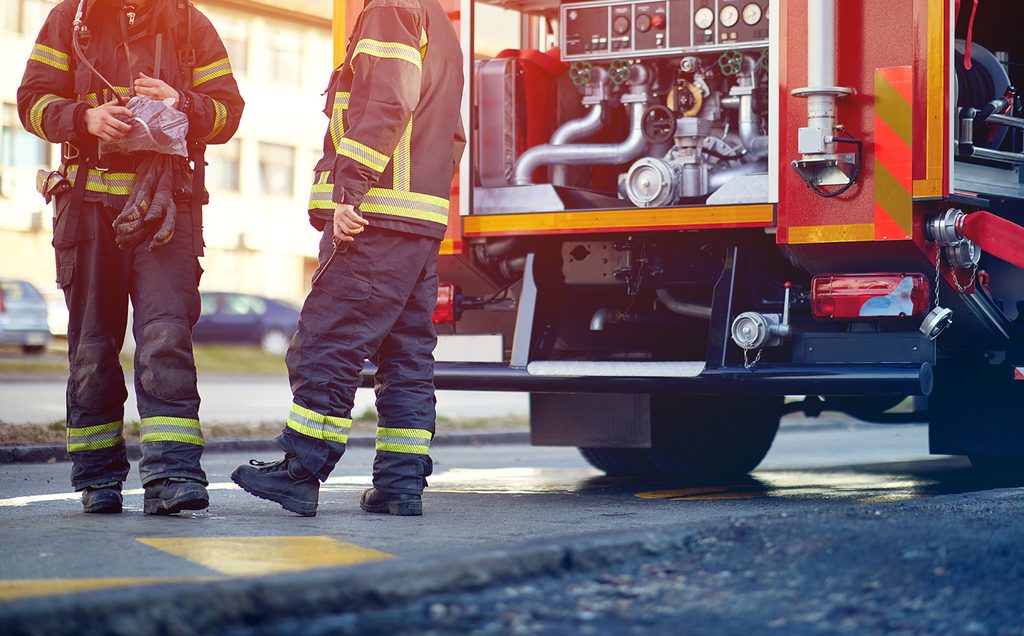
A pre-incident walkthrough is much easier than exchanging that information in the parking lot while smoke is coming from the building.
The next time you conduct an evacuation drill, look back at the facility and ask: Did we test our emergency plan – or did we only test our ability to leave the building?
Sources
- Occupational Safety and Health Administration. 29 CFR 1910.38, Emergency Action Plans.
- Occupational Safety and Health Administration. Evacuation Plans and Procedures eTool, Emergency Action Plan elements.
- National Fire Protection Association. (2026). Warehouse Structure Fires: 2020-2024.