Knowing the Right Way Isn’t Enough
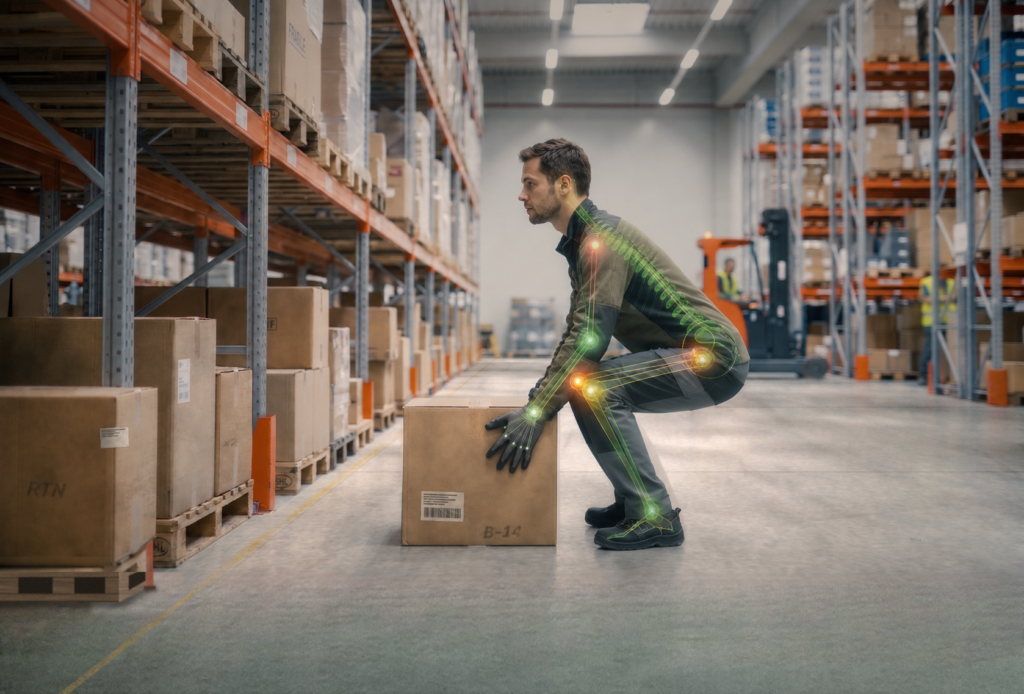
A warehouse employee knows how to lift safely but repeatedly handles materials stored near floor level. Another pushes a heavily loaded cart because the available equipment is poorly suited to the task. Both may have completed ergonomic training, yet the exposure remains. The problem is not necessarily a lack of knowledge; it may be how the work is designed.
Many ergonomics programs still depend on periodic assessments, one-time training, and investigations after an injury. These activities have value, but they may overlook physical demands that employees face every shift. By the time an injury brings attention to a task, the underlying conditions may have existed for months.
Design Work Around People
Ergonomics is often approached as a matter of individual technique. In reality, performance is shaped by workstation design, equipment, material placement, production demands, and the way tasks are organized. If frontline employees possess the right knowledge of human movement but the work environment does not support it, that knowledge will never translate into safer performance.
2025 warehouse research found that poor shelf heights and workstation design contributed to excessive bending, with bending occurring in 33% of observed picking processes and lumbar muscle strain reported at 67%; the study recommends redesigning shelf systems around the “golden working zone” to reduce awkward movement and occupational injury risk
— Optimization Design of Operational Postures for Intelligent Warehouse Pickers: An Empirical Study Based on Human Factors Engineering, 2025.
The work environment shapes human performance. When we design the environment around human capability, safer movement becomes easier, more natural, and more sustainable. Ergonomics must therefore become part of the entire employee journey—from onboarding and daily operations to changes in equipment and processes. The goal is not to monitor or blame workers, but to understand how work is performed, identify conditions that create risk, and develop practical solutions.
Human movement intelligence offers a way forward by combining technology, ergonomic expertise, and worker feedback to identify risk patterns before they lead to injuries.
Technology can reveal where to look; employees and ergonomics professionals help explain why a movement occurs and what can realistically change.
From Insights to Solutions
Organizations can integrate human movement intelligence into existing safety and operations processes through five steps:
- Establish a baseline
Assess tasks involving lifting, pushing, pulling, repetition, and awkward postures. Combine assessment results with injury trends and employee feedback to prioritize work that needs attention. - Use technology to understand exposure
Wearable sensors can quantify movement and physical demands, while computer vision can help identify potentially hazardous postures. These tools complement—not replace—ergonomic expertise and firsthand knowledge of the job. - Co-design solutions with the people doing the work
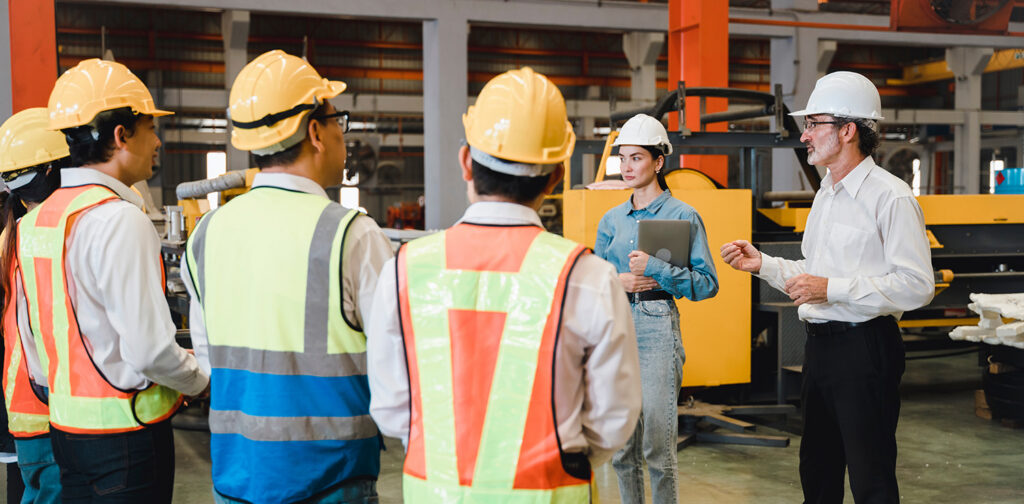
Bring employees who perform the task and supervisors who manage it into the design phase, before recommendations are finalized. Ask what makes the task difficult, what constraints exist, and which changes would fit the workflow. Test prototypes or proposed equipment under realistic conditions, collect feedback, and refine the design. This helps avoid solutions that look effective on paper but are impractical in daily operations, while building ownership and end-user buy-in. - Embed ergonomics into daily operations
Provide task-specific onboarding, coaching, and reassessments when tools, materials, or processes change. Repeated bending may call for adjusted storage heights; excessive push forces may require better casters, redesigned carts, or powered assistance. Favor changes to the task over relying on people performing them. - Verify results and improve
Measure changes in physical demands, employee-reported discomfort, completion of corrective actions, and usability of the new method. Revisit the solution with the employees using it to confirm that improvements hold up over time.
Trust is essential throughout. Movement data should be used to improve work—not to blame employees, monitor individual productivity, or judge isolated movements without context. Clear data practices and meaningful worker participation help make the program credible and useful.
Make Safer Work the Easier Choice
The future of warehouse ergonomics is not measured by the number of checklists completed or training sessions delivered. It is measured by whether the work itself becomes safer, easier, and more sustainable. The strongest solutions emerge when movement data identifies a concern, ergonomic expertise guides the response, and the people who perform and manage the task help shape the final design.
Are we asking employees to adapt to poorly designed work—or designing work that supports their health and performance?
When organizations involve employees from assessment through implementation, ergonomics becomes more than compliance. It becomes a shared process of prevention, continuous improvement, and stronger operations.
Schedule a call today
EHS Value Systems, LLC helps warehouse and industrial organizations turn these principles into action by evaluating ergonomic risk, engaging frontline teams, integrating practical technology, and developing people-centered improvements that strengthen safety, performance, and sustainable operational outcomes.
Call us at (775) 347-8258 to learn how we can optimize your operations.
Sources
An Empirical Study Based on Human Factors Engineering. GAS Journal of Engineering and Technology, Vol. 2, Issue 6, 2025. DOI: 10.5281/zenodo.16937420.